

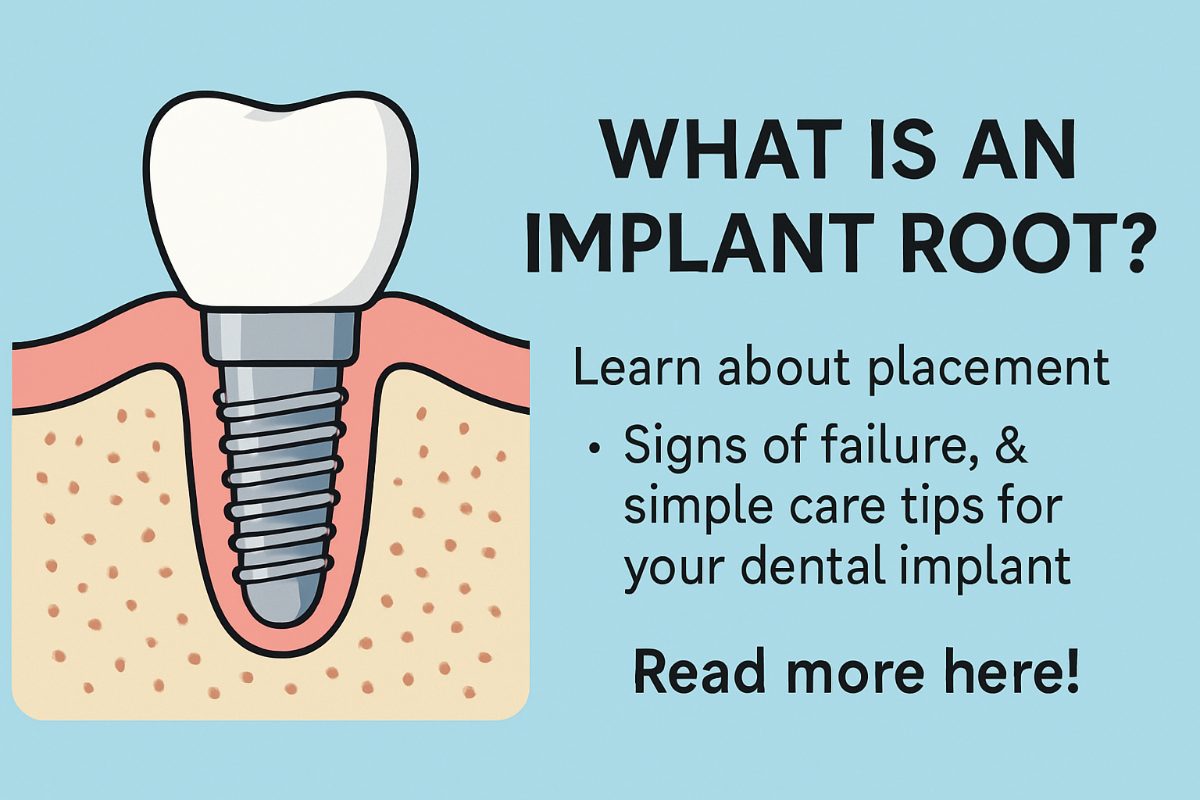
An implant root is the part of a dental implant that sits in your jaw and replaces a natural tooth root. This short post explains what an implant root is, how it’s placed, signs it might be failing, simple care tips, and the next steps to get a consult. The keyword implant root appears here to guide readers through what matters for implant success.
What Is the Implant Root?
An implant root is a root-form implant, usually made of titanium or zirconia, that acts like a natural tooth root. Unlike a natural root, it is a man-made post placed into the jawbone to support a crown, bridge, or denture. Dentists use an implant root when a tooth is missing because it restores chewing function and helps keep bone from shrinking.
How the Implant Root Works: Osseointegration and Stability
The implant root becomes stable through osseointegration, which is when bone grows tightly around the implant surface. That fused connection gives a strong foundation for a replacement tooth and can last many years with good care. Healthy bone and pink, firm gums are important for osseointegration and long-term success of the implant root.
How an Implant Root Is Placed
Planning & imaging
Placement starts with an exam and imaging—X-rays or a CBCT scan—to measure bone volume and plan the exact position. Digital impressions help design the final crown so the implant root matches your bite and nearby teeth.
Surgical placement
During surgery the dentist or specialist places the implant root into the bone under local anesthesia. The procedure is typically short and most patients have a brief recovery while the site heals. Sometimes a temporary tooth is used while the implant root integrates.
Restoration
After healing, an abutment is attached to the implant root and a crown, bridge, or denture is made to fit. The finished restoration looks and functions like a natural tooth and is supported by the implant root below the gum.
Signs an Implant Root May Be Failing
Watch for persistent pain, a feeling that the tooth is loose, swelling, pus, gum recession around the implant, or changes seen on X-rays. If you notice any of these, contact your dentist quickly. Early care can often save the implant root and avoid more extensive treatment.
Caring for Your Implant Root
Care is similar to natural teeth: brush twice daily, floss or use interdental brushes, and avoid biting very hard objects. Quit smoking if you can—smoking raises the risk of implant problems. Keep regular dental cleanings and check-ups so your dentist can monitor gum health and the implant root.
Why Consider White Wolf Dental for Implant Roots
White Wolf Dental Group in Port Orange, FL has experience with implant planning and placement, CBCT imaging, an on-site lab, and custom milling for restorations. Their team includes clinicians trained in implants, periodontics, and prosthodontics, which helps coordinate care and improve outcomes when placing an implant root.
Next Steps: Questions to Ask and How to Book a Consult
Bring questions about success rates, imaging used, estimated healing time, cost and financing, and any warranty or follow-up care. To learn if an implant root is right for you, schedule an implant consult at White Wolf Dental for personalized planning and clear answers.