

If you’ve wondered which statement is correct about dental implants, this article gives straight answers. You’ll learn the basics of how implants work, which common claims are true or false, what affects success, and the simple steps to find out if implants are right for you.
Read on for clear facts and practical next steps so you can make an informed decision about replacing missing teeth.
How Dental Implants Work: The Basics
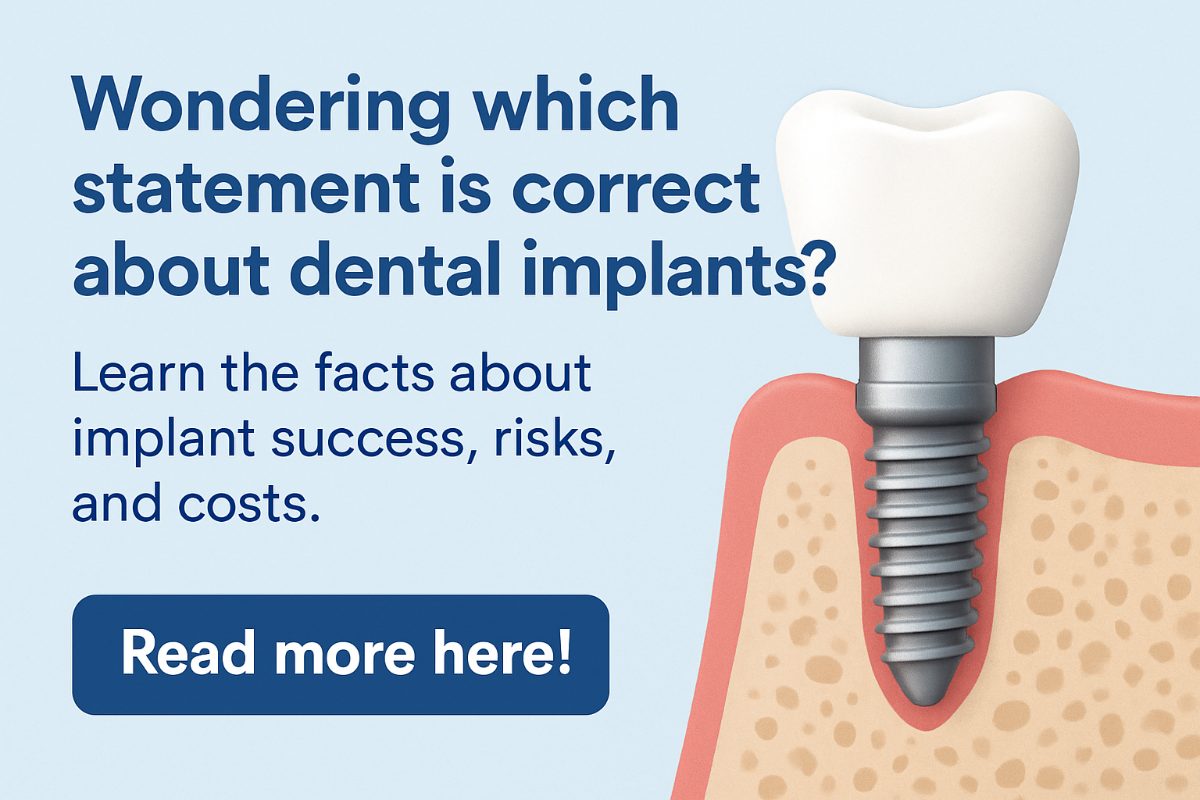
A dental implant is a small titanium post placed into the jawbone. Over several months the bone grows around the implant in a process called osseointegration, making the post a stable anchor. A visible restoration — a crown, bridge, or denture — is then attached to the implant.
With good care, implants let you chew, speak, and smile like natural teeth. The implant post itself can last decades or longer; the visible crown or denture may need replacement every 10–20 years depending on wear and care.
Common Statements About Dental Implants — Which Are True?
“They look and feel like real teeth”
This is generally true. Implants are anchored in bone, so they don’t slip like removable dentures. Custom crowns match color and shape to your teeth. Most people report improved chewing and confidence. Some patients need a short adjustment period for chewing and speech, but the result is a stable, natural-feeling tooth replacement.
“Everyone is a candidate for implants”
This is false. Good candidates need enough jawbone and generally good overall health. Certain conditions make implants harder or riskier:
- Low bone volume in the jaw
- Uncontrolled diabetes or certain immune disorders
- Heavy smoking or tobacco use
- Some medications that affect bone healing
Many people who aren’t immediate candidates can become candidates after procedures like bone grafting or sinus lifts, or they may be offered alternative treatments.
“Implants always last a lifetime”
This is partly true and partly misleading. The titanium implant can last decades or a lifetime with good oral hygiene and regular dental care. However, the visible restoration (crown, bridge, or denture) can wear out and usually needs replacement over time. Implants can also fail in rare cases due to infection, bone loss, or medical issues.
What Affects Implant Success, Risks, and Costs
Several factors affect whether implants succeed and how much treatment costs:
- Risk factors: bone loss, infection (peri-implantitis), smoking, poorly controlled diabetes, and certain medications.
- Additional procedures: bone grafts, sinus lifts, or extractions add time and cost but improve success for patients with low bone volume.
- Cost variation: prices vary by the number of implants, type of restoration, need for grafting or imaging, and regional fees.
Choosing an experienced implant dentist and following post-op care instructions lower the chance of complications.
How To Find Out Which Statement Is Correct About Dental Implants For You
The only way to know which statements apply to your situation is a personal exam and imaging. Here’s what to expect at a first evaluation:
- Clinical exam of your teeth and gums
- Dental imaging, often CBCT (3D X-ray) to check bone volume and anatomy
- Review of medical history and medications
- Discussion of treatment options, timeline, and costs
If you want a clear answer tailored to your mouth, schedule a consultation. Our office can perform the exam and CBCT, explain options, and provide a written treatment plan so you know next steps. Book an evaluation to get started.