

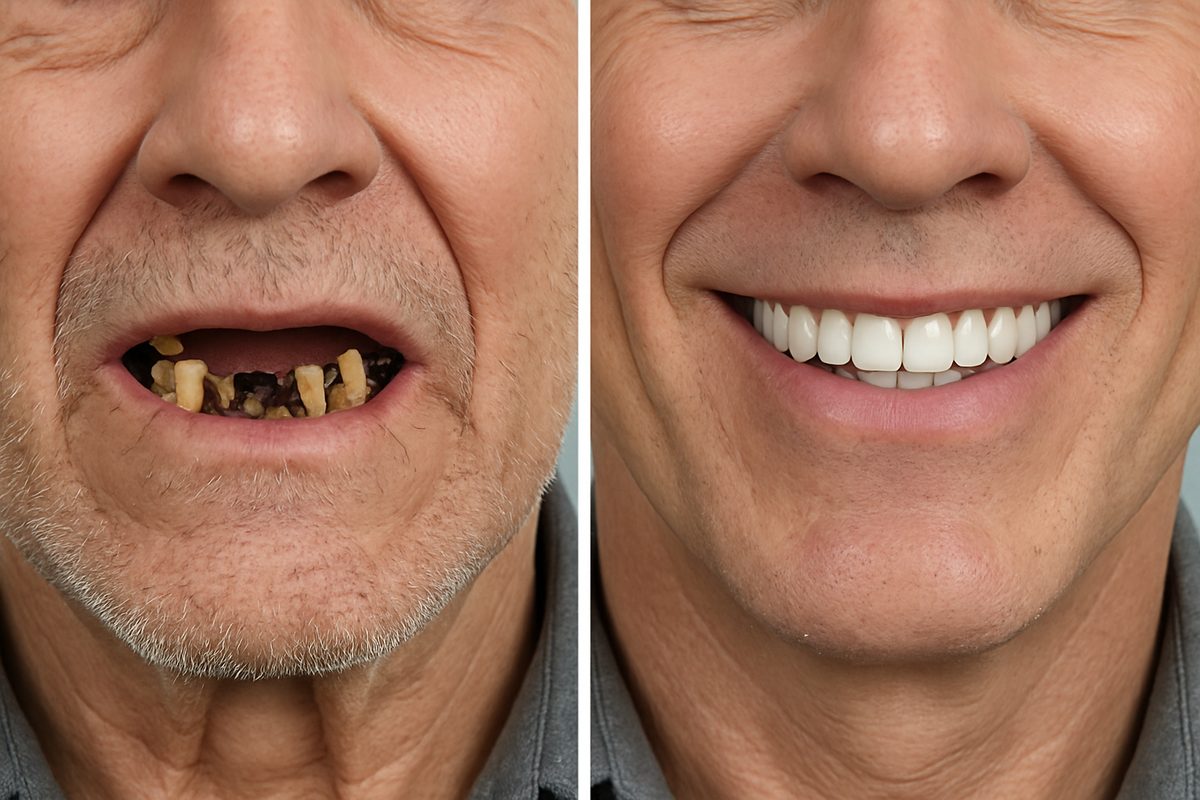
A mouth full of dental implants in Port Orange, FL, means replacing most or all upper and/or lower teeth with implant posts and a full prosthesis. People who have many failing teeth, loose dentures, or long‑term tooth loss often consider this option. This guide explains who a candidate is, how doctors plan and place full-mouth implants, what the recovery process looks like, and what questions to ask.
Is a mouth full of dental implants right for you?
Who is a good candidate
Good candidates are generally healthy adults with controlled chronic conditions, adequate bone volume or a willingness to have grafting, and stable gum health. Those who have lost many teeth or who cannot wear dentures comfortably often choose a mouth full of dental implants in Port Orange, FL, for lasting support and function.
When other options might be better
If medical issues make long surgery risky, or if bone loss is extreme and the patient prefers less invasive care, staged treatments, traditional dentures, or implant‑supported bridges may be recommended first. Your team will review alternatives based on health, cost, and long‑term goals.
How doctors plan a full‑mouth implant case
Diagnosis and imaging
Planning uses CBCT scans and digital impressions to map bone, nerves, sinuses, and bite. These 3D images show exactly where implants can be placed safely, helping to avoid complications.
Creating a treatment plan
The plan outlines the number of implants required, whether the prosthesis will be fixed or removable, and whether extraction, grafting, or sinus lifts are necessary. Staged approaches may place implants in phases to spread treatment over time.
The step‑by‑step treatment process
Surgery and implant placement
Surgery may be done with local anesthesia, IV sedation, or general anesthesia. Implant posts are placed into the jawbone, where they begin to integrate. Expect to spend several hours in the office for a full-mouth case and receive clear post-op instructions.
Temporary teeth and healing
Most patients receive temporary restorations so they can eat and speak while implants osseointegrate over 3–6 months. Temporaries protect healing tissue and help refine the final bite.
Final restorations
Once healed, custom-milled prostheses are fitted, adjusted for comfort and function, and permanently attached. The team fine‑tunes fit, bite, and appearance before finalizing.
What to expect during recovery with a mouth full of dental implants
Pain, swelling, and typical symptoms
Mild to moderate pain and swelling are common for a few days. Cold packs, pain meds, and rest help. Follow home care and antibiotics if prescribed.
Eating, speaking, and daily life
Start with soft foods, progress as your comfort allows, and follow cleaning routines for temporary appliances. Speaking may feel odd for a short time but improves as you adapt.
Follow‑ups and long‑term care
Regular checkups, professional cleanings, and excellent oral hygiene practices help maintain the health of implants. Night guards or bite adjustments may be needed over time.
Benefits and possible risks
Major benefits
Patients experience improved chewing, clearer speech, facial support, and a durable solution that often lasts for decades with proper care.
Potential complications
Risks include infection, implant failure, or need for bone grafts. Careful planning and imaging can significantly reduce these risks.
Cost and timeline overview
Costs vary depending on the grafting needs, the number of implants, and the materials used. Expect a multi‑month timeline from planning to final restorations. Ask about financing, warranties, and a full cost estimate for a clear picture.
Why advanced technology and an on‑site lab matter
CBCT, digital scans, and in‑house milling speed treatment improve fit and cut visits. These tools enable precise placement and expedite the delivery of both temporary and permanent teeth. The on‑site lab is especially helpful.
About White Wolf Dental Group
White Wolf Dental Group in Port Orange, FL, offers an experienced implant team, CBCT imaging, digital workflows, and an on-site lab to streamline the process of placing a full mouth of dental implants in Port Orange, FL. Their coordinated approach can simplify planning and improve outcomes.
Next steps: how to prepare for your consultation
Bring questions about the timeline, the number of implants, temporary teeth, the total cost, and the warranty. Ask to see before‑and‑after cases and a clear treatment plan. Schedule a consult to learn if a mouth full of dental implants in Port Orange, FL is right for you.